Cargo Net Setup Care and Cleaning Guide - CarInteriorMix
A cargo net is one of those small car accessories that quietly makes everything feel more organized. It keeps grocery bags from tipping over, prevents a toolbox from sliding into your tailgate, and helps reduce the little rattles and thumps that make a drive feel messy. When it?s installed correctly, a cargo net also protects your interior panels, carpeting, and trim from scuffs caused by shifting cargo.
But cargo nets aren?t ?set it and forget it.? The wrong net, poor anchor placement, or neglected cleaning can lead to stretched elastic, snapped hooks, and even damage to your trunk liner or tie-down points. This guide breaks down how to choose the right style, install it properly, maintain tension, clean it without ruining the fibers, and avoid the most common mistakes?so your trunk or cargo area stays tidy and ready for anything.
Understanding Cargo Nets: Types, Materials, and Best Uses
Common cargo net styles
- Envelope (flat) nets: Lay against the back of the rear seats or floor and hold items behind the net. Great for grocery bags and small boxes.
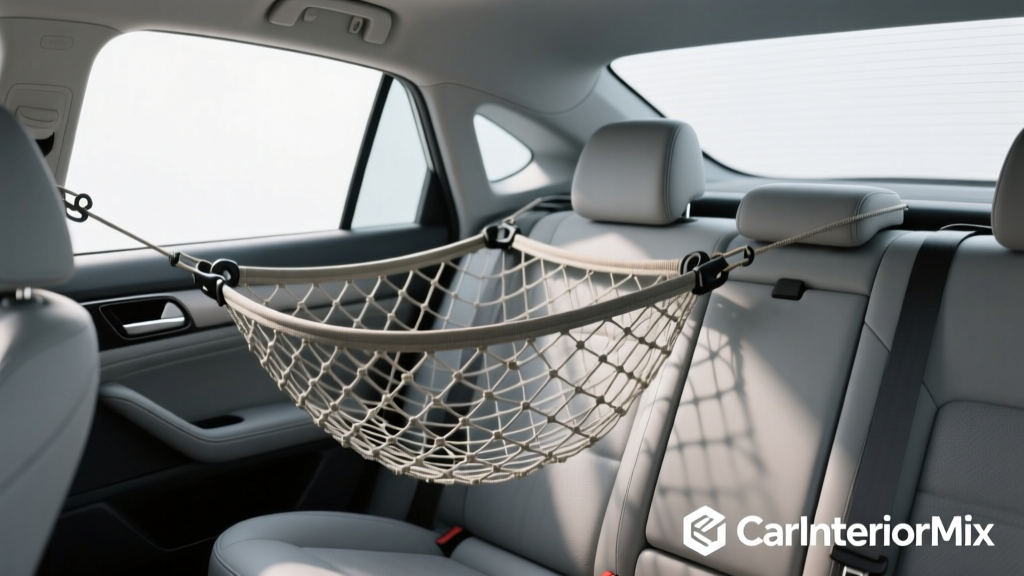
- Pocket (hammock) nets: Create a pouch that cradles items. Ideal for loose items like sports gear, cleaning supplies, or emergency kits.
- Floor-to-seat barrier nets: Larger nets used to separate cargo from passengers in SUVs/wagons. Best for pets, luggage, and bulky loads.
- Truck bed nets: Heavy-duty nets designed for open beds with stronger UV resistance and hardware.
Materials you?ll see (and what they mean for care)
- Elastic polypropylene/nylon webbing: Most common. Good stretch and strength, but can degrade with UV and harsh chemicals.
- Latex-core elastic cords: Very stretchy and secure, but sensitive to heat and certain cleaners.
- Metal or polymer hooks: Metal is strong but can scratch trim; polymer is gentler but may fatigue sooner.
How to pick the right cargo net for your vehicle
Before buying, check your cargo area for factory D-rings or tie-down points. Many vehicles have four anchor points in the trunk or cargo floor. If you only have two, a pocket-style net may work better than an envelope net that needs four corners.
- Small sedans: Envelope net for groceries and small packages.
- Hatchbacks: Pocket net plus an envelope net if you carry a mix of loose items and boxes.
- SUVs: Consider a barrier net if you regularly stack cargo above seatback height.
- Trucks: Choose a UV-stable, heavy-duty bed net with reinforced grommets.
Cargo Net Setup: Step-by-Step Installation (Done Right)
What you?ll need
- Your cargo net (matched to your trunk/cargo area size)
- Access to anchor points (factory tie-downs, D-rings, cargo rails)
- Optional: soft hook covers or rubber sleeves (prevents scratches)
- Optional: aftermarket anchor kit (only if your vehicle lacks tie-down points)
Step 1: Identify anchor points and test their strength
- Locate factory tie-down loops, D-rings, or cargo rail slots.
- Gently tug each anchor to confirm it?s secure and not loose in the trim.
- If an anchor flexes or creaks, avoid loading it heavily until it?s inspected or tightened.
Real-world example: Many crossovers have tie-downs mounted to thin plastic trim covers. They?re fine for stabilizing grocery bags but not for restraining heavy coolers in emergency braking. If you routinely carry heavy loads, use anchors bolted to the body or cargo rails designed for load-bearing.
Step 2: Choose the orientation (envelope vs. pocket positioning)
- Envelope net: Usually mounts vertically against the seatback or horizontally on the cargo floor to keep items from sliding.
- Pocket net: Mounts with the opening facing up/out so you can tuck items into the pouch.
Do a quick dry fit: hold the net in place and confirm it can stretch to each corner without looking ?maxed out.? A net installed at full stretch all the time loses elasticity faster.
Step 3: Attach hooks in the correct order
- Attach the top two hooks first (or the side hooks if it?s a floor net).
- Attach the bottom hooks second, stretching evenly.
- Step back and check that the net is centered and not twisted.
- Load a light item first to confirm it holds without sagging.
Step 4: Set tension for security (not strain)
A properly tensioned cargo net should feel snug, but you should still be able to lift it slightly to insert items. If hooks are pulled at sharp angles or the net is overstretched, you?ll see premature wear at the corners.
- Too loose: Items slide under/around it and it sags.
- Too tight: Hooks bend, stitching strains, anchors flex, and elastic loses rebound.
Step 5: Confirm it won?t damage interior panels
Hook tips and metal clips can scratch plastic trim, trunk threshold trim, or painted surfaces. If your net uses metal hooks:
- Add rubber sleeves or hook covers.
- Make sure hooks face away from visible panels where possible.
- Avoid letting hooks dangle when the net isn?t in use?secure the net or unhook and store it.
Care and Maintenance: Keep Your Cargo Net Strong and Safe
Weekly ?30-second? inspection
If you use your cargo net often, a quick check prevents surprises:
- Look for fraying webbing near corners and stitched seams.
- Check elastic rebound: stretch slightly and see if it returns evenly.
- Inspect hooks for bending, cracking, or rust.
- Confirm anchors are tight and not pulling out of trim.
Seasonal care tips (heat, cold, sun)
- Hot climates: Elastic ages faster in heat. Avoid leaving the net stretched tightly all summer; loosen or unhook when not needed.
- Cold climates: Some plastics become brittle. Be gentle with polymer hooks in freezing temps.
- UV exposure: If your cargo area gets direct sun (wagons/hatches), consider a UV-resistant net or store it when not in use.
When to replace a cargo net
Cargo nets aren?t meant to last forever. Replace yours if you notice:
- Stitching separating at corners
- Elastic permanently stretched (sags even when empty)
- Cracked hooks or bent metal clips that no longer close securely
- Visible cuts or abrasion spots that could tear under load
Cleaning a Cargo Net: Step-by-Step (Without Ruining Elastic)
What to avoid before you start
- Bleach: Can weaken fibers and discolor webbing.
- Harsh degreasers/solvents: May break down elastic and coatings.
- Very hot water: Can accelerate elastic fatigue.
- Machine drying on heat: Heat is the enemy of stretch materials.
Basic cleaning for dust, dirt, and light spills
- Remove the net from the vehicle to avoid soaking trunk carpeting or trim.
- Shake it out outdoors to remove grit (grit is what causes abrasion over time).
- Rinse with cool to lukewarm water to loosen debris.
- Mix mild soap (a gentle car wash soap or mild dish soap) with water in a bucket.
- Hand scrub lightly with a microfiber towel or soft brush, focusing on stained areas and corner seams.
- Rinse thoroughly until the water runs clear?leftover soap attracts dirt.
- Air dry fully, out of direct sunlight if possible.
Cleaning sticky messes (soda, juice, grocery spills)
- Blot sticky areas with a damp microfiber towel?don?t grind it in.
- Use a mild soap solution and work from the outside of the stain inward.
- Rinse multiple times. Sticky residue left behind will make the net feel stiff and attract lint.
Pro tip: If your net smells like old groceries, add a small splash of white vinegar to the rinse water (not a strong vinegar soak). It helps neutralize odors without harsh chemicals.
Dealing with pet hair and lint
- Use a rubber pet hair brush or rubber glove to pull hair off the netting.
- A lint roller works well for smaller envelope nets.
- Vacuum with a brush attachment before washing?wet hair clumps and becomes harder to remove.
Product Recommendations and Smart Buying Tips
Factory-style vs. universal cargo nets
- OEM (vehicle-specific) nets: Best fit, usually higher quality hardware, and designed around factory anchor placement. Higher cost.
- Universal nets: More affordable and widely available. Fit varies; hardware can be hit-or-miss.
Features worth paying for
- Reinforced corner stitching (box-stitching or multi-layer corners)
- Coated or covered hooks to protect interior trim
- Adjustable straps for tension tuning (especially useful if anchor points are oddly spaced)
- UV resistance for hatchbacks and truck beds
Simple comparison: which style fits your use?
- Mostly groceries and small bags: Envelope net
- Random loose items (gloves, bottles, air pump, straps): Pocket net
- Camping gear, luggage stacked high, pets: Barrier net or cargo area divider
Common Cargo Net Mistakes to Avoid
- Overloading the net: Cargo nets stabilize; they?re not a replacement for ratchet straps when hauling heavy loads.
- Using the wrong anchors: Attaching to flimsy trim hooks or child-seat anchors (not designed for this purpose) can cause damage.
- Mounting with sharp angles: Twisted or angled hooks chew through webbing over time.
- Leaving metal hooks loose: Dangling hooks scratch plastic panels and can chip paint on the trunk threshold.
- Cleaning with harsh chemicals: Degreasers and bleach shorten the life of elastic.
- Storing it wet: Mildew smell, corrosion on metal hooks, and weakened fibers.
Real-World Setup Ideas for a Cleaner, Quieter Cargo Area
- The ?grocery lane?: Install an envelope net against the seatback and place grocery bags behind it. Add a trunk organizer on one side for small items.
- Emergency kit pocket: Use a pocket net on the side wall (if your vehicle has side anchors) for a first-aid kit, flashlight, and gloves.
- Road trip mode: Use an envelope net for day-to-day items and add a barrier net if you stack luggage above seatback height in an SUV.
FAQ: Cargo Net Setup, Cleaning, and Longevity
How tight should a cargo net be?
Snug enough that items don?t slip out, but not so tight that the corners are stretched to their limit. If the net looks ?pulled thin? at the corners or your anchors flex, reduce tension or choose a larger/adjustable net.
Can I wash a cargo net in a washing machine?
Hand washing is safest for elastic and stitching. If you must machine wash, use a gentle cycle in cold water, place the net in a mesh laundry bag, and skip the dryer?air dry only.
Why does my cargo net keep sagging?
Common causes include aged elastic, a net that?s too large for your anchor spacing, or anchors positioned too low/high for the net?s shape. Try repositioning the hooks for better geometry; if it still sags empty, it?s likely stretched out.
Will a cargo net stop heavy items in a crash?
No. Cargo nets are meant to reduce sliding and keep light-to-moderate items organized. For heavy cargo, use rated tie-down straps connected to proper load-bearing anchors, and keep heavy items low and forward.
How do I prevent hooks from scratching my interior?
Use coated hooks, add rubber sleeves, and orient hooks away from trim. When the net isn?t in use, unhook it and store it in a soft pouch or clip it to a single anchor so it doesn?t swing around.
What?s the best cargo net for an SUV with pets?
A barrier net designed as a cargo divider is the best choice. Look for strong webbing, wide straps, secure mounting hardware, and compatibility with your SUV?s cargo rails or factory mounting points.
Next Steps: Set It Up Once, Maintain It in Minutes
If you want a cargo area that stays clean and functional, start by checking your anchor points and choosing a net style that matches how you actually use your vehicle. Install it with even tension, protect your trim from hooks, and give it quick inspections so small wear doesn?t turn into a failure at the worst time. When it?s time to clean, keep it simple: mild soap, gentle scrubbing, thorough rinsing, and air drying.
For more practical car interior tips?from trunk organization to upholstery care?explore the latest guides on carinteriormix.com.